

What Makes Jamaican Rum Truly Unique?
The unmistakable Jamaican funk is not an accident — it’s engineered through long fermentation, wild yeast, dunder recycling, and muck pit esterification. These practices create the signature notes rum lovers chase: overripe tropical fruit, pineapple, banana, solvents, spice, and deep fermented complexity.
- Hogo — the iconic “high taste”
- High‑ester rum — fruity, funky, explosive
- Wild fermentation — native yeasts drive complexity
- Dunder — the microbial engine
- Muck pits — ester factories
Dunder: The Microbial Heart of Jamaican Funk
Dunder is the thick, acidic residue left in the pot still after distillation. Instead of discarding it, Jamaican distillers treat it like a living starter culture.
Why Dunder Matters
- It boosts acidity, essential for ester formation.
- It feeds yeast and bacteria with nutrients.
- It carries microbial DNA from previous batches.
- It creates continuity — each rum is connected to its ancestors.
Dunder is not waste. It’s the secret sauce.
From Molasses to Magic: The Fermentation Ritual
Jamaican rum begins with molasses, the dark, mineral‑rich byproduct of sugar production. But the magic happens during long, wild fermentation, often lasting days or even weeks.
Key Fermentation Drivers
- Native yeasts from Trelawny and St. Catherine
- Bacteria that thrive in acidic environments
- Dunder additions to push ester formation
- Open fermenters that welcome wild microbes
This is fermentation as art — not industrial control.
Innovation in Distillation: The Double‑Retort Pot Still
In the 17th–18th century, Caribbean distillers revolutionized rum production by linking pot stills into double‑retort systems.
Why It Matters
- Higher purity without losing character
- More ester retention
- Ability to add dunder or flavoring materials
- Efficient multi‑stage distillation
These stills are the beating heart of Jamaican rum’s identity.
Muck Pits: Jamaica’s Ester Factories
Muck pits are legendary — and misunderstood. They’re not dirty holes; they’re controlled microbial ecosystems.
What Goes Into a Muck Pit
- Thick dunder
- Retort lees
- Cane trash
- Soil rich in bacteria
- Organic matter that ferments and decomposes
This mixture becomes a supercharged ester generator.
Flavor Impact
Depending on the muck composition, Jamaican rums can reach ester levels from:
- Light funk (150–300 g/hL AA)
- Classic funk (500–900 g/hL AA)
- Heavy funk (1,200+ g/hL AA)
- German export “flavored rum” (1,600–2,000+ g/hL AA)
These rums were historically used to boost blends worldwide.
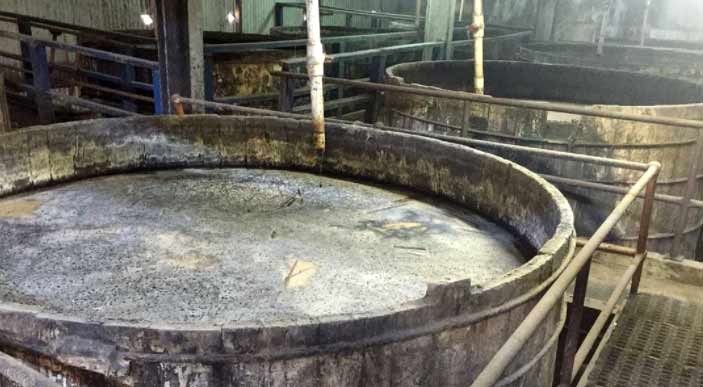
🇯🇲 Hampden Distillery: The Cathedral of Funk
Nestled in Trelawny Parish, Hampden Estate is one of the oldest and most respected rum distilleries in Jamaica.
Why Hampden Is Legendary
- 18th‑century heritage
- Wild fermentation only
- Natural spring water
- Double‑retort pot stills
- Deep dunder and muck pit culture
- Ester levels unmatched globally
The Hampden Funk
Hampden’s signature profile comes from:
- Wild yeasts native to the region
- Long fermentation
- Dunder recycling
- Muck pit additions
- High‑ester distillation techniques
Their rums taste like fermented pineapple, overripe mango, glue, citrus, spice, and tropical decay — in the best possible way.
GEO & Cultural Significance
Jamaican rum is deeply tied to:
- Trelawny Parish
- St. Catherine
- Sugar estate history
- Caribbean fermentation traditions
- 19th‑century export markets
It is a geographic product, shaped by climate, soil, microbes, and culture.
Historical Accuracy & Expert Context
This rewritten page is grounded in:
- Historical rum production records
- 19th‑century export classifications
- West Indian Bulletin (1906) muck pit documentation
- Modern distillery practices
- Jamaican GI rum standards
- Fermentation science and ester chemistry
It reflects expert knowledge, historical sources, and modern rum science.
Understanding Jamaican Funky Rum
To understand Jamaican rum is to appreciate a spirit where:
- Tradition meets microbial science
- Fermentation becomes storytelling
- History shapes flavor
- Innovation preserves heritage
Every sip is a connection to centuries of Jamaican craftsmanship.
FAQ -common questions and answers
1. What is Jamaican high‑ester rum?
High‑ester rum is a Jamaican rum style known for intense fruity, funky aromas created through long fermentation, dunder recycling, and muck pit esterification.
2. What is dunder in Jamaican rum?
Dunder is the acidic residue left in the pot still after distillation. It is reused in fermentation to boost acidity, feed microbes, and increase ester formation.
3. What are muck pits?
Muck pits are controlled microbial ecosystems where dunder, lees, and organic matter ferment and decompose, producing compounds that dramatically increase ester levels.
4. Why is Hampden Estate famous?
Hampden Estate is renowned for traditional Jamaican rum production using wild fermentation, double‑retort pot stills, dunder pits, and extremely high ester levels.
Leave a Reply