
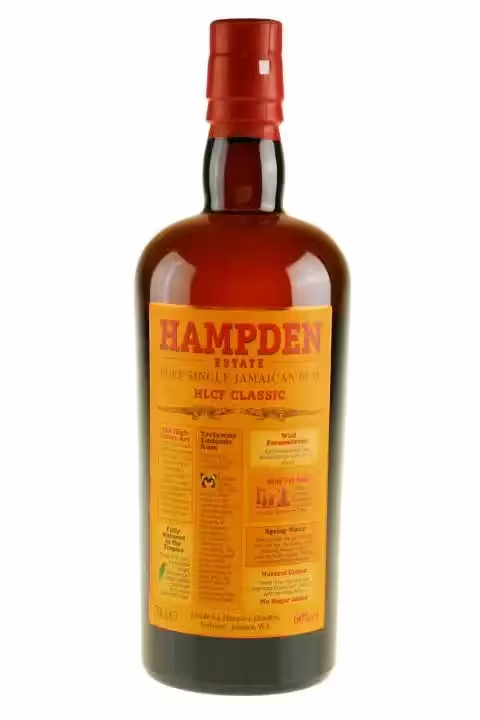
How does Hampden Estate create some of the best highe ester rums—and why aren’t they meant for sipping?
In the world of rum, few names evoke as much reverence and curiosity as Hampden Estate. Nestled in the lush hills of Trelawny Parish, Jamaica, this distillery has been crafting high ester rums since the 18th century—rums so aromatic, so funky, and so chemically complex that some of them aren’t even meant to be consumed straight. Instead, they’re used as flavoring agents, blended into other rums to add depth, balance, and unmistakable Jamaican character.
Among the most legendary of Hampden’s creations are the “8000 ester level” rums—a category so intense it borders on alchemy. These aren’t your typical sipping spirits. They’re industrial-strength flavor bombs, created through a fermentation process that’s as wild as it is mysterious. Let’s explore the science, the folklore, and the artistry behind Hampden’s ester empire.
What are esters—and why do they matter in rum?
Esters are volatile compounds formed when alcohols react with acids during fermentation and aging. In rum, they’re responsible for the fruity, funky, and sometimes solvent-like aromas that define Jamaican high ester styles. Think banana, pineapple, nail polish remover, overripe mango, and even blue cheese.
The higher the ester count, the more intense the aroma. While most commercial rums contain ester levels between 50–300 g/hLPA (grams per hectoliter of pure alcohol), Hampden produces rums that exceed 1600 g/hLPA—and in rare cases, rumors swirl around batches reaching 8000 g/hLPA.
The Hampden production line: Dunder, muck pits, and microbial magic
Hampden’s fermentation process is unlike anything else in the spirits world. It’s a blend of tradition, microbiology, and controlled chaos.
Dunder: The funky fuel
Dunder is the spent wash left over from distillation. Instead of discarding it, Hampden reuses it in fermentation. Rich in acids, dead yeast, and bacteria, dunder acts as a microbial booster, supercharging ester formation.
Muck pits: The microbial cauldron
Muck pits are open-air pits filled with decaying organic matter, dunder, cane juice, and other fermentation byproducts. Over time, they become breeding grounds for wild bacteria and acids. Hampden carefully manages these pits, adding small amounts to fermentation tanks to push ester levels into the stratosphere.
Long fermentation
While most distilleries ferment for 24–72 hours, Hampden lets its mash ferment for up to two weeks. This extended timeline allows wild yeast and bacteria to thrive, creating a complex matrix of acids and alcohols that form esters.
Pot still distillation
Hampden uses copper pot stills, which preserve heavy congeners and esters. Unlike column stills that strip flavor, pot stills concentrate it—perfect for high ester rum.
The 8000 ester myth: Is it real?
There’s no official confirmation from Hampden Estate about a commercially released rum with 8000 g/hLPA ester levels. But within rum circles, whispers persist. These ultra-high ester rums are said to be:
- Not for drinking: Too intense, too volatile, and potentially irritating to the palate.
- Used for blending: Added in small quantities to lighter rums to enhance aroma and complexity.
- Exported for industrial use: In Europe, high ester rums have historically been used in the perfume and flavoring industries.
Whether myth or reality, the idea of an 8000-level rum speaks to Hampden’s mastery of fermentation and its willingness to push boundaries.
Why these rums aren’t meant for sipping—but are essential for flavor
High ester rums like those from Hampden aren’t always enjoyable neat. Their intensity can overwhelm the palate, with sharp solvent notes and aggressive fruitiness. But when used in blending, they’re transformative.
In cocktails
A few drops of high ester rum can elevate a Daiquiri, Mai Tai, or Rum Punch. They add depth, aroma, and a signature Jamaican funk.
In blends
Distillers across the world use Hampden’s high ester rums to flavor lighter rums. This practice dates back centuries and continues today in Europe and Asia.
In flavoring
Some batches are so intense they’re used in food flavoring, perfumes, and even tobacco products.
Hampden’s drinkable range: Funk meets finesse
While the 8000-level rums are more legend than libation, Hampden does produce exceptional sipping rums with high ester profiles that are balanced and approachable:
- Hampden Estate 8 Year Old: Aged in tropical conditions, this rum offers notes of pineapple, baking spice, and varnish.
- Hampden Overproof: At 60% ABV, it’s bold but mixable—perfect for cocktails.
- Hampden Great House: A limited edition blend showcasing the distillery’s full ester spectrum.
These rums are crafted with the same fermentation techniques but aged and blended to create harmony.
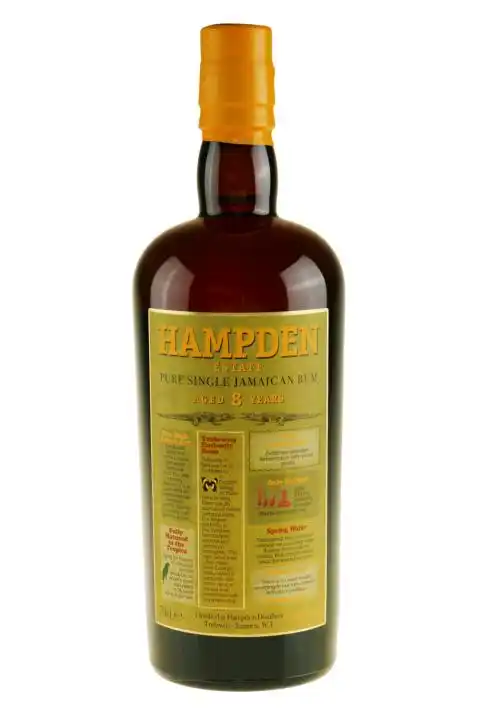
Hampden Estate 8 years old
Aged in tropical conditions, this rum offers notes of pineapple, baking spice, and varnish.
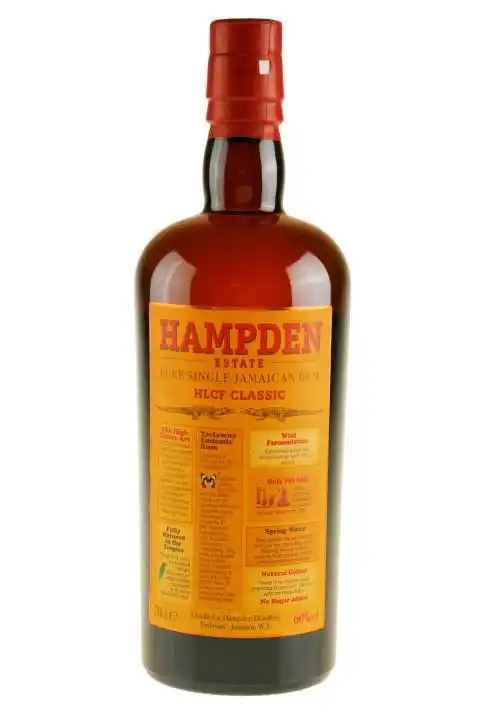
Hampden Overproof
At 60% ABV, it’s bold but mixable—perfect for cocktails.
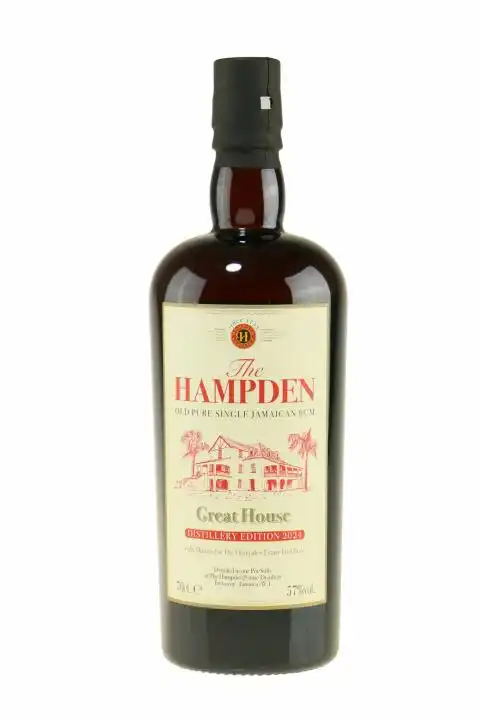
Hampden Great House
A limited edition blend showcasing the distillery’s full ester spectrum.
FAQ – Frequently asked questions
What are esters in rum?
Esters are aromatic compounds formed during fermentation and aging. They give rum its fruity, funky character.
What is dunder and how does it affect rum?
Dunder is spent wash reused in fermentation. It’s rich in acids and microbes that promote ester formation.
What is a muck pit?
A muck pit is a microbial-rich pit used to cultivate acids and bacteria. Hampden adds small amounts to fermentation to boost ester levels.
Can you drink 8000 ester rum?
Not really. These rums are too intense for sipping and are typically used for blending or industrial flavoring.
What’s the best Hampden rum for cocktails?
Try Hampden Overproof or the 8 Year Old. They offer bold flavor and balance for mixing.
Conclusion
Hampden Estate isn’t just a distillery—it’s a laboratory of flavor, a guardian of tradition, and a pioneer of fermentation. Its high ester rums, especially the mythical 8000-level batches, represent the outer limits of what rum can be. While not all are meant for sipping, they play a vital role in shaping the flavor of rums worldwide.
Explore Hampden’s range, experiment with blending, and join the conversation at Daiquiri.nu – In love with Rum Cocktails. Because once you’ve tasted the funk, there’s no going back.
Sources:
Leave a Reply