
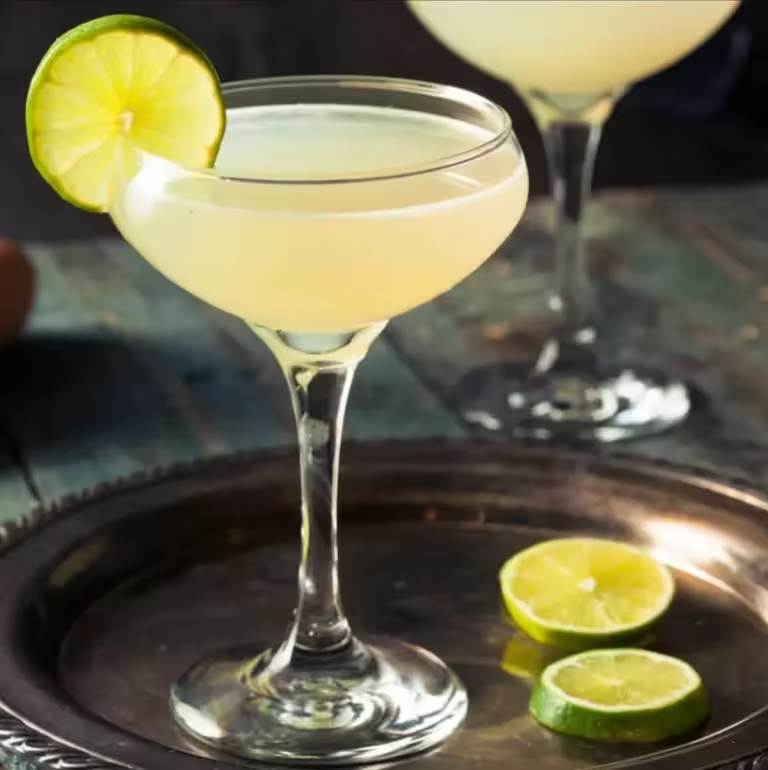
How to get the stuff to make a Daiquiri and mix it correctly?
The Daiquiri is more than a cocktail—it’s a cultural icon. From its humble beginnings in the iron mines of Cuba to its global fame in cocktail bars and beach resorts, the Daiquiri has evolved into a symbol of refreshment, craftsmanship, and rum’s versatility. But what makes this drink truly unforgettable is the rum behind it—especially when high ester Jamaican rum enters the mix. This article dives deep into the Daiquiri’s history, its sensory magic, and how Jamaican distillers have shaped its flavor journey.
Transform a cocktail into a masterpiece
Just like the right toy can spark a child’s creativity, the right rum can transform a cocktail into a masterpiece. The Daiquiri is a perfect example of this alchemy. Its simplicity—rum, lime, sugar—belies a rich history and a world of flavor possibilities. Choosing the right rum, especially one inspired by Jamaica’s high ester tradition, unlocks a sensory experience that’s both nostalgic and thrilling. Let’s explore how this Cuban classic became a global legend and how you can taste its evolution in every sip.
What are a Daiquiri and what is the difference from traditional and the other concepts?
The classic Daiquiri is a blend of white rum, fresh lime juice, and sugar, shaken with ice and served straight up. It’s crisp, tart, and refreshing. But the Daiquiri has many faces:
- Traditional Cuban Daiquiri: Made with Bacardi Carta Blanca, the original recipe by Jennings Stockton Cox used lime, sugar, rum, and crushed ice2.
- Frozen Daiquiri: Popularized in the mid-20th century, often blended with fruit and ice.
- Hemingway Daiquiri: A dry, grapefruit-infused version created for Ernest Hemingway at El Floridita in Havana.
- Modern Daiquiri: Bartenders today experiment with aged rums, flavored syrups, and even high ester Jamaican rums to add complexity.
The difference lies in the rum. Traditional Cuban rums are light and clean. Jamaican high ester rums, by contrast, are bold, funky, and aromatic—adding layers of tropical fruit, spice, and fermentation funk that elevate the Daiquiri to new heights.
How to compare the products and taste and smell them in a sensoric way and share the experience further
Tasting rum for a Daiquiri is a sensory adventure. Here’s how to approach it:
1. Visual inspection
Look for clarity and color. White rums are traditional, but aged or overproof rums can add depth.
2. Nose
High ester rums explode with aromas—banana, pineapple, acetone, even cheese. Compare this to the subtle vanilla and coconut notes of Cuban-style rums.
3. Palate
Taste neat first. High ester rums have a fiery, fruity punch. Cuban rums are smoother and more delicate.
4. Finish
High ester rums linger with complexity. They’re built for sipping and mixing. Try Worthy Park 109 or Rum Fire for a bold Daiquiri.
5. Sharing the experience
Host a rum tasting. Compare Jamaican and Cuban styles. Use sensory wheels and tasting notes. Share your favorites on Daiquiri.nu and join the community.
Why the Daiquiri is growing and is spread all over the world to everyone to enjoy and love
The Daiquiri’s global rise is no accident. Its simplicity makes it accessible, while its versatility invites innovation. Here’s why it’s booming:
- Tiki revival: Bartenders rediscovering classic rum cocktails.
- Craft rum movement: Distillers embracing traditional methods, long term fermenting, and bold flavors.
- Ai-powered mixology: Apps and platforms like Daiquiri.nu use Ai to recommend rum pairings and cocktail variations.
- Social media: Instagram-worthy drinks and tasting events fuel curiosity.
From Tokyo to Toronto, the Daiquiri is a canvas for rum lovers. And with Jamaican high ester rum, it’s a masterpiece.
What is the secret about Rum that makes the Daiquiri special?
Rum is the soul of the Daiquiri. But not all rums are created equal.
The Cuban foundation
Light, column-distilled rums like Bacardi Carta Blanca offer a clean base. They let lime and sugar shine.
The Jamaican twist
High ester rums, made with dunder and mockpit techniques, bring funk and fire. These rums were originally created to flavor lighter rums in blends—but today, they’re stars in their own right.
Disappearing brands
Jamaica once had dozens of distilleries. Many have vanished, but legends like Long Pond, Hampden Estate, and Worthy Park remain. Others, like Innswood and Appleton’s older expressions, are cherished by collectors.
The secret?
It’s in the fermentation. Long term fermenting with wild yeast, dunder, and muck creates esters—volatile compounds that deliver aroma and flavor. These rums don’t just mix—they transform.
Mini-case: how the Daiquiri came up to make history in the cocktail world?
The Daiquiri’s origin story is cinematic:
- 1898: Jennings Stockton Cox, an American engineer, arrives in Cuba after the Spanish-American War.
- Daiquiri mines: With only rum, lime, sugar, and ice, Cox invents the “Rum Sour.”
- 1909: U.S. Navy officer Lucius W. Johnson visits Cox, tastes the drink, and brings the recipe to the Army and Navy Club in Washington, D.C..
- El Floridita, Havana: Bartender Constantino Ribalaigua Vert refines the Daiquiri. Hemingway falls in love with it.
- 1950s–2000s: The Daiquiri becomes a global icon, from beach resorts to cocktail competitions.
Today, the Daiquiri is a bridge between tradition and innovation. And Jamaican rum is its boldest companion.
FAQ – Frequently asked questions
How to enjoy the Jamaican high ester rum and 63% ABV in a Daiquiri?
Use a smaller pour (20–30 ml), balance with lime and sugar, and shake hard. Try Rum Fire or Wray & Nephew Overproof.
What is the difference between Cuban and Jamaican rum in a Daiquiri?
Cuban rum is light and clean. Jamaican rum is funky, fruity, and intense—especially high ester styles.
Why is dunder and mockpit important in Jamaican rum?
They’re fermentation boosters. Dunder is spent wash; mockpit is a microbial-rich pit. Together, they create esters and deep flavor.
How to compare rum brands for Daiquiri cocktails?
Taste side-by-side. Use sensory wheels. Look for esters, ABV, and fermentation style.
What is the best rum for a classic Daiquiri?
Bacardi Carta Blanca for tradition. Worthy Park 109 or Hampden Estate for funk. Try both and decide your favorite.
Conclusion
The Daiquiri is a timeless cocktail with a story worth sipping. From Cuban mines to Jamaican distilleries, it’s a journey of flavor, culture, and craftsmanship. Whether you’re mixing with a light Cuban rum or a fiery Jamaican high ester, the Daiquiri invites you to explore, taste, and share.
Join the conversation – In love with Rum Cocktails. Share your tasting notes, discover new brands, and fall in love with the Daiquiri all over again.
Cheers to history, flavor, and the rum that makes it unforgettable.
Sources:
Leave a Reply